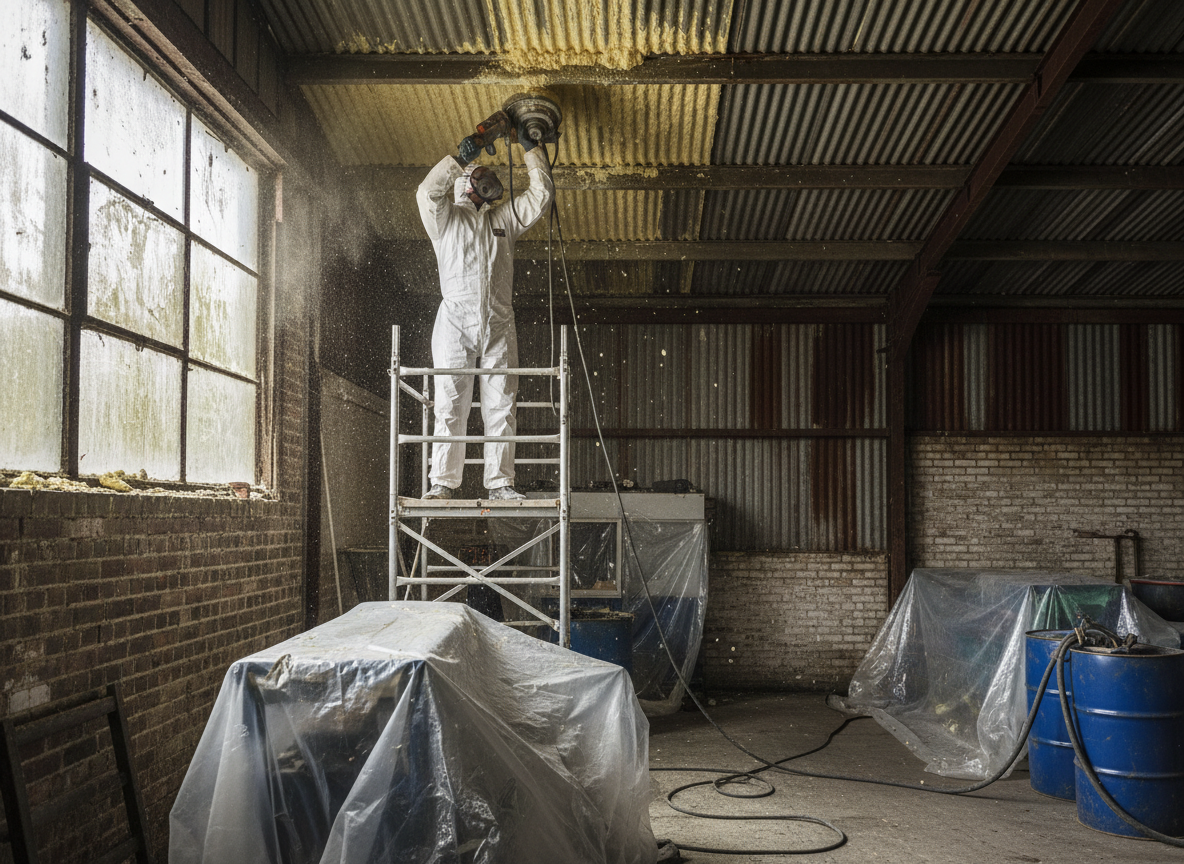
Commercial buildings in Barnstaple often feature spray foam applied to roofs and cavity walls in the 1990s and early 2000s, particularly on retail units along the High Street and industrial sheds near the Taw estuary. Over time the foam degrades, traps condensation and creates hidden damp that affects steel beams and electrical runs. Removal requires isolating live services, using negative air machines to contain dust, and cutting back to sound substrate without damaging original timber or concrete decks common in the area's older stock.
Devon winters bring prolonged damp and wind-driven rain that accelerates foam breakdown inside unventilated commercial roof voids. Crews must account for limited access in converted Victorian warehouses around Ladywell and Pilton, where low headroom and fragile asbestos cement sheets add layers of planning. Each job starts with moisture mapping and core sampling to confirm whether the foam has bonded to metal purlins or has simply delaminated, dictating whether mechanical scraping or solvent softening is required.
After removal, surfaces are cleaned and treated with antifungal wash before any new insulation or lining is installed. Commercial clients in Barnstaple frequently request phased work outside trading hours to avoid disrupting tenants. All waste is bagged and taken to licensed disposal points, with full photographic records supplied for building control or insurance purposes.
Access and Containment Challenges in Barnstaple Units
Many commercial properties around the Pannier Market and Rolle Quay have restricted roof access and shared party walls. Negative pressure setups and sealed walkways prevent dust migration into adjacent retail spaces during removal.
Technician insight
In Barnstaple, the thing that catches most people out with Commercial Spray Foam Removal is how often the foam was sprayed straight onto unlined asbestos cement sheets in 1980s and 1990s industrial units near the river. Once you start pulling it, the sheets can crack and you are suddenly managing licensed waste you did not price for.
Pilton Industrial Unit Roof Void
A small engineering workshop in Pilton reported musty smells and rust on steel purlins. Survey found 150 mm of closed-cell foam applied directly to the underside of the asbestos cement roof sheets. We isolated the space, removed the foam in sections under negative pressure, treated the sheets and disposed of the waste. The client could then install new ventilated lining without further moisture issues.
How it works
- 1
Site Survey and Testing
Inspect roof voids and wall cavities in the Barnstaple commercial unit, take core samples and map moisture levels to determine foam condition and substrate type.
- 2
Isolation and Containment
Shut down HVAC, seal the work area with poly sheeting and set up negative air filtration to contain dust before any cutting begins.
- 3
Foam Removal
Mechanically cut and scrape foam from beams, decking and walls, using solvent where bonded to metal, while monitoring for hidden services or asbestos.
- 4
Clean and Treat
Vacuum all residue, wash surfaces with antifungal solution and document condition for handover to the client or follow-on contractor.
- 5
Waste Disposal and Sign-Off
Bag and remove all waste to licensed sites, provide photographic record and final moisture readings.
Pricing
Upfront quotes provided after survey; final cost depends on access, foam depth and disposal volume.