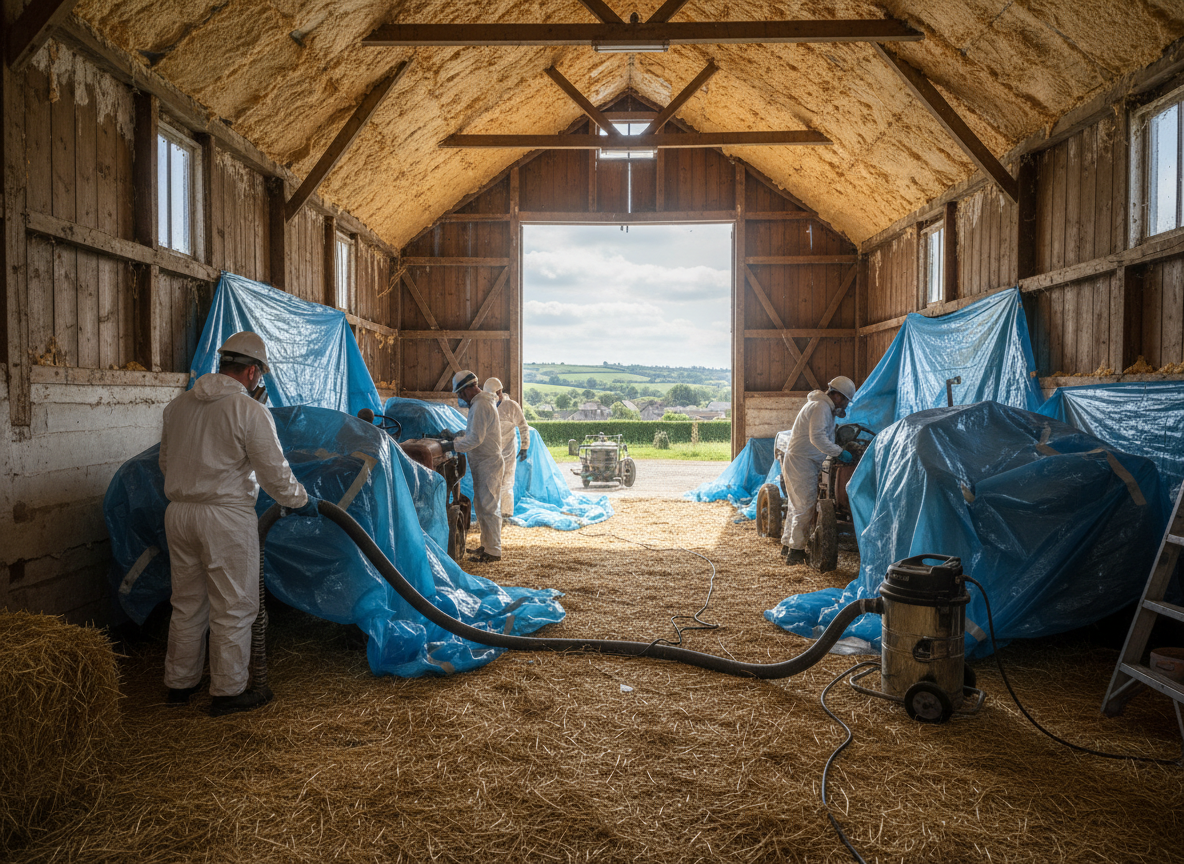
Spray Foam Removal Barnstaple reaches Ilfracombe properties from the Ladywell yard in under thirty minutes. The town's Victorian terraces and Edwardian semis along Fore Street and High Street frequently contain closed-cell foam that was installed to combat damp but now traps salt-laden air from the Atlantic. Crews arrive with negative-air machines and infra-red cameras to map the foam without disturbing original lathe and plaster ceilings.
Access on the steeper lanes around Capstone Hill and the harbour often requires smaller vans and hand-carrying equipment down steps to rear yards. Atlantic gales bring driving rain that soaks through any roof vents left open during removal, so tarpaulins and temporary ridge vents are standard kit on every Ilfracombe job.
Homeowners near Tunnels Beaches and the pier notice faster mould regrowth once foam is stripped because the stone walls retain moisture longer than inland Barnstaple stock. The team leaves lofts ventilated to current Building Regs and returns after four weeks to check readings before any new insulation is discussed.
Around Ilfracombe
We regularly work near:
- 📍Ilfracombe Harbour
- 📍Capstone Hill
- 📍Tunnels Beaches
- 📍Fore Street
- 📍Ilfracombe Academy
- 📍St Brannock's Church
Spray Foam Removal Barnstaple in Ilfracombe — Local Notes
- •Ilfracombe's exposed coastal position means salt crystallisation behind foam on north-facing walls, requiring extra neutralising washes before new insulation.
- •Narrow rear access on streets like Portland Street and St Brannock's Road limits machinery size, so most work is done with handheld electric scrapers and vacuum sleds.
- •Older slate roofs common around the harbour suffer nail fatigue; crews walk every roof with harnesses before starting to avoid dislodging tiles during extraction.
- •Winter Atlantic storms can raise indoor humidity above 85 % once foam is removed, so dehumidifiers run for 48 hours on every EX34 postcode job.