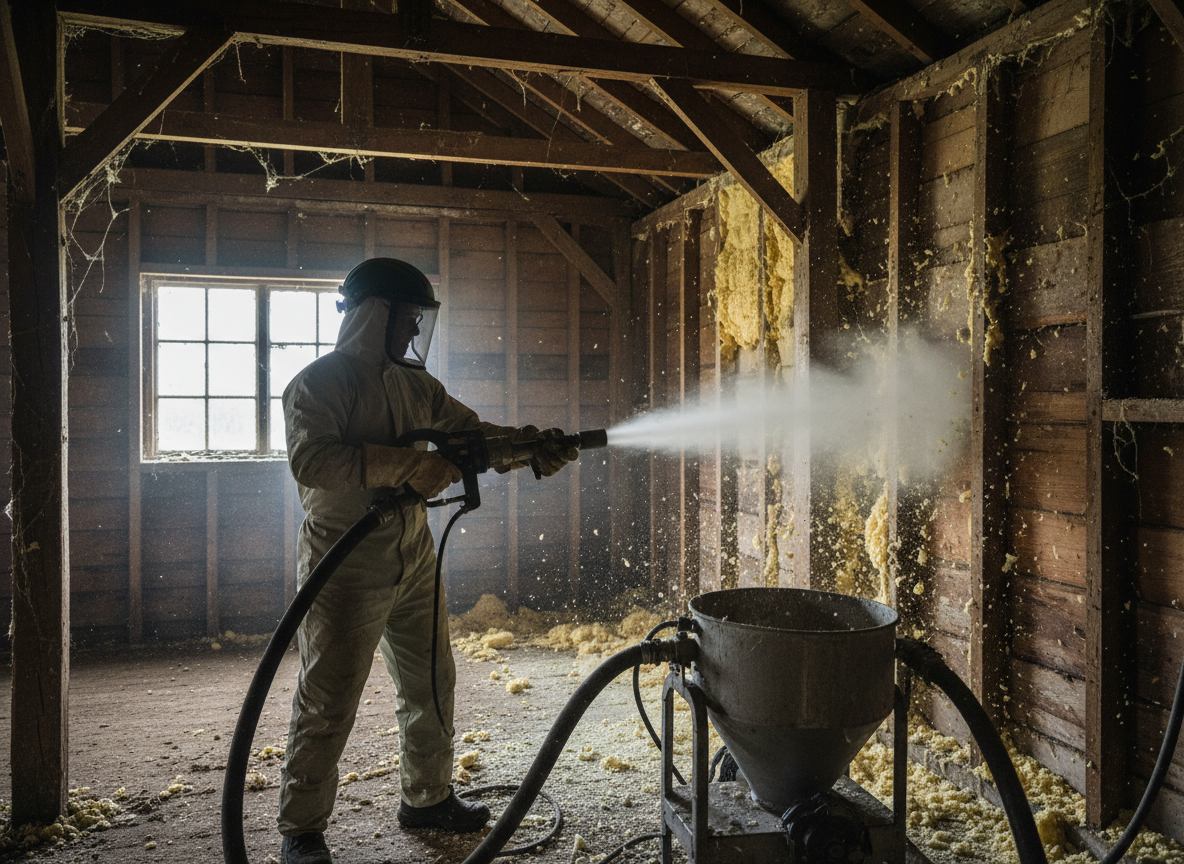
Barnstaple’s older terraced and semi-detached houses, many built before the 1930s, often have spray foam applied directly to rafters and under slate roofs. Over time the foam traps moisture against the timber, leading to rot that shows up first as discoloured ceilings in upper rooms. Dry ice blasting removes the foam by freezing and fracturing it so it lifts cleanly, avoiding the gouging that scraping or chemical stripping can cause on historic lath and plaster.
The North Devon climate brings frequent driving rain and high humidity, especially along the Taw estuary. This means any residual foam left in joints or around chimney breasts quickly re-absorbs water and restarts the decay cycle. The blasting process uses solid CO2 pellets that sublimate on contact, leaving no secondary waste that could block gutters or soak into garden soil on tight Barnstaple plots.
Access is usually through existing loft hatches or small roof voids common in Georgian and Victorian terraces around the town centre. Operators must work around electrical cables and water tanks that sit close to the rafters in these compact properties. The method keeps dust and debris minimal, which matters when working above occupied bedrooms in shared walls.
After blasting, the rafters are left ready for inspection so any timber treatment or ventilation upgrades can be carried out before new insulation is fitted. Homeowners in the EX31 postcode often combine this work with improving airflow through the eaves to meet current building standards for pitched roofs.
Technician insight
In Barnstaple the thing that catches most people out with dry ice blasting spray foam removal is how the older slate roofs on terraces around the town centre hold pockets of foam behind the last row of battens. The damp coming off the Taw means those hidden strips stay wet and the pellets need angling differently or you leave a strip that restarts the rot within a season.
Loft foam removal on a Georgian terrace
A homeowner in central Barnstaple noticed ceiling stains after heavy winter rain. Inspection showed spray foam trapping moisture against rafters in a narrow loft with limited hatch access. Dry ice blasting cleared the foam cleanly without disturbing the original lath and plaster. The rafters dried out and new ventilation was added before re-insulation.
How it works
- 1
Site Assessment
We inspect the loft or cavity from Ladywell base, checking rafter condition, electrical runs and access points in the specific Barnstaple property.
- 2
Protection Setup
Floors, tanks and wiring are covered and ventilation paths are noted before blasting begins to prevent pellet scatter into living spaces.
- 3
Dry Ice Blasting
Pellets are directed at the foam in controlled passes, fracturing it from timber and plaster without mechanical scraping.
- 4
Debris Removal and Final Check
All loosened material is vacuumed out and rafters are examined for remaining residue or hidden damp before handover.
Pricing
Cost depends on loft size, foam thickness and access difficulty in Barnstaple homes; we provide an upfront quote after inspection.