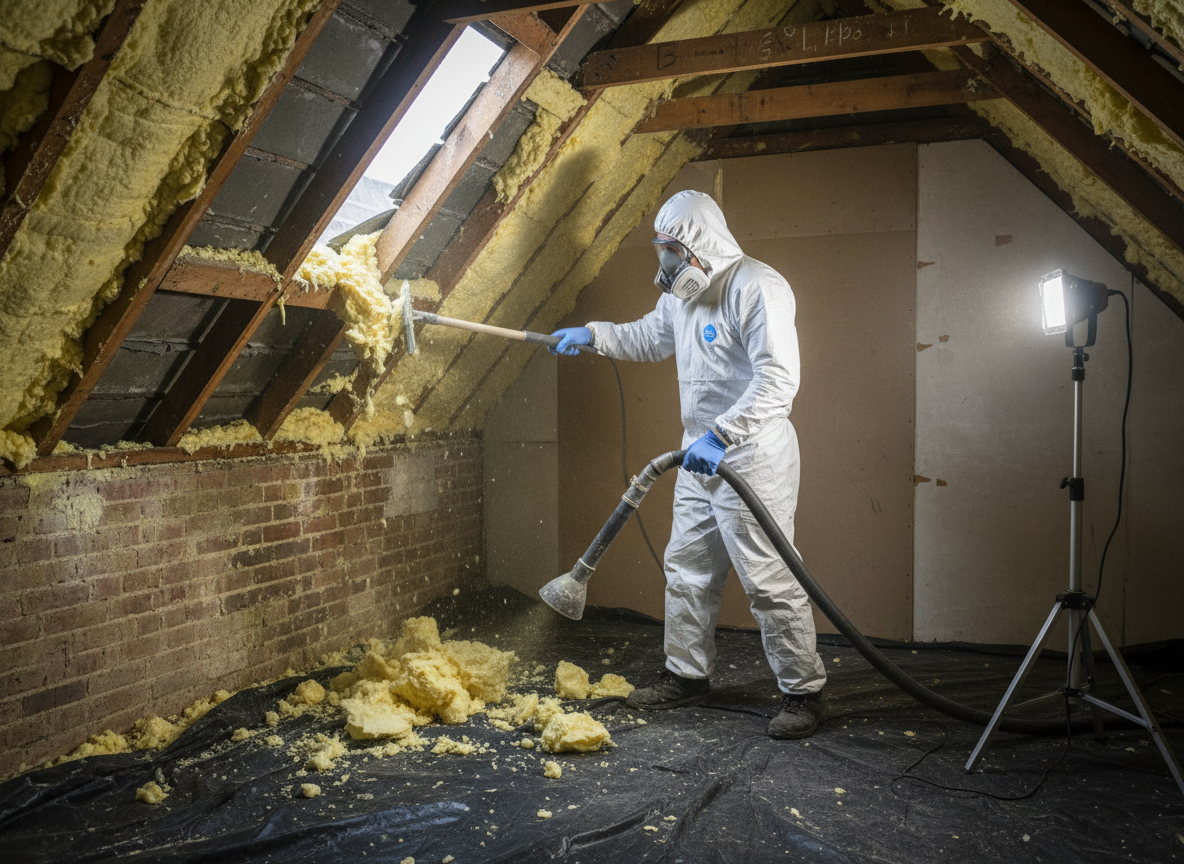
Barnstaple properties often feature older stone or timber-framed construction that was never designed for closed-cell spray foam. Once installed, the foam can trap moisture against rafters and joists, especially during the frequent heavy rainfall the area receives from the Bristol Channel. Removal requires careful mechanical scraping and vacuum extraction to avoid damaging original lath and plaster ceilings below while preventing dust migration into living spaces.
Edge cases frequently arise in semi-detached houses along the Taw valley where party walls share insulation layers. Attempting DIY removal here risks breaching fire separation and spreading contaminants into neighbouring properties. Professional teams use negative-air machines and sealed chutes to contain debris before it reaches the narrow streets around the Pannier Market.
Local building control expects any re-insulation work after removal to meet current ventilation standards. Homeowners in the EX31 postcode regularly discover that foam applied over original eaves has blocked airflow, creating condensation issues that only become visible once the material is gone.
Handling Hidden Timber Damage
After foam extraction, rafters and wall plates must be inspected for rot caused by trapped condensation. In Barnstaple’s older terraces this often means temporary propping while affected timbers are treated or replaced before any new insulation is considered.
Technician insight
In Barnstaple the thing that catches most people out with spray foam insulation removal is how the damp coastal air combines with older stone walls around Ladywell and Pilton to trap moisture behind the foam, so rot often only appears once stripping begins.
Loft Extraction Near the Taw
Homeowner in central Barnstaple noticed musty smells and ceiling staining after recent heavy rain. Inspection revealed closed-cell foam blocking eaves ventilation on a 1930s semi. We removed the foam layer by layer, treated affected joists and restored airflow, eliminating the condensation source.
How it works
- 1
Site Assessment
Inspect loft, walls or underfloor areas to map foam depth, substrate condition and access routes in the specific Barnstaple property.
- 2
Containment Setup
Install dust barriers, negative air filtration and sealed extraction chutes to protect living areas from debris.
- 3
Mechanical Removal
Use specialist tools to cut, scrape and vacuum foam without damaging original timbers or plaster in older Devon buildings.
- 4
Substrate Inspection and Cleanup
Check for hidden moisture damage, remove residues and ventilate the space before handover.
Pricing
Upfront quotes provided after on-site inspection; final cost depends on access, foam thickness and any timber repairs required.